
Last updated November 22, 2026
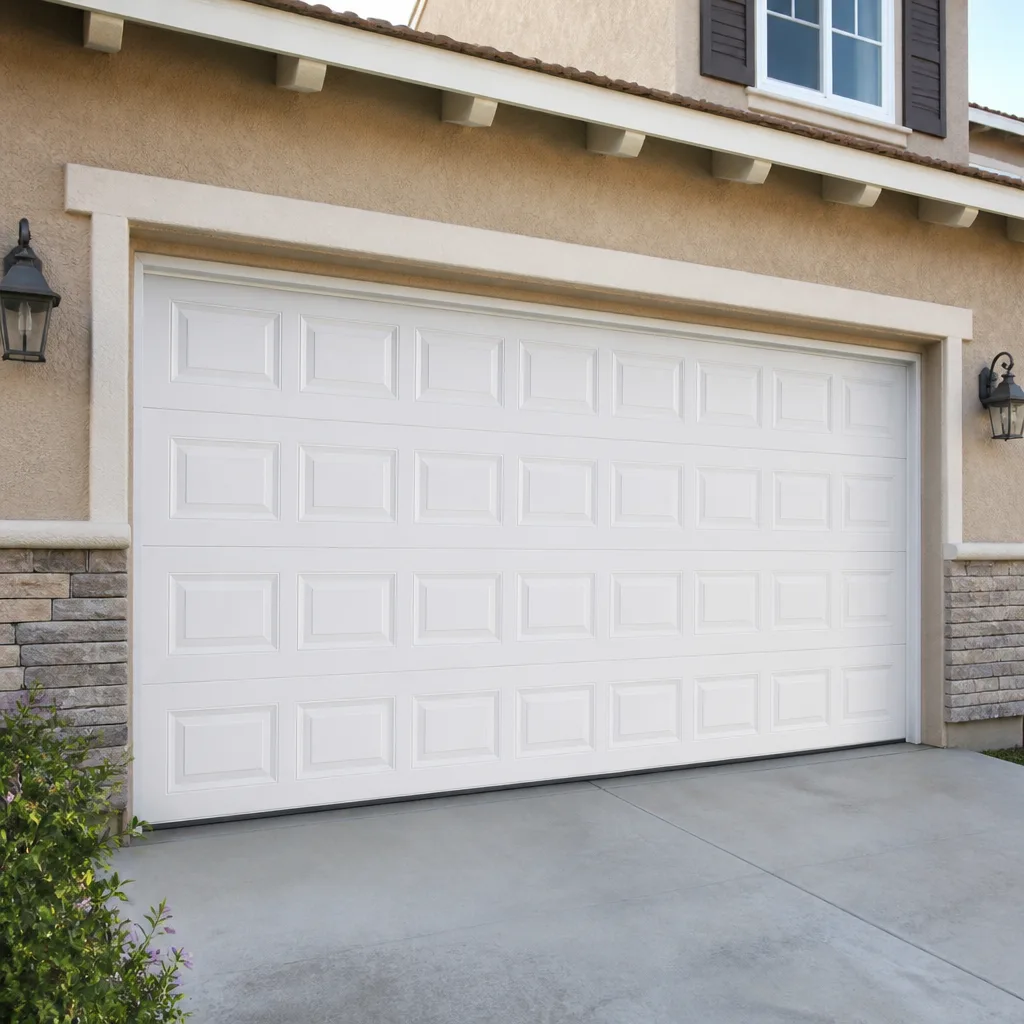 Raised-panel steel
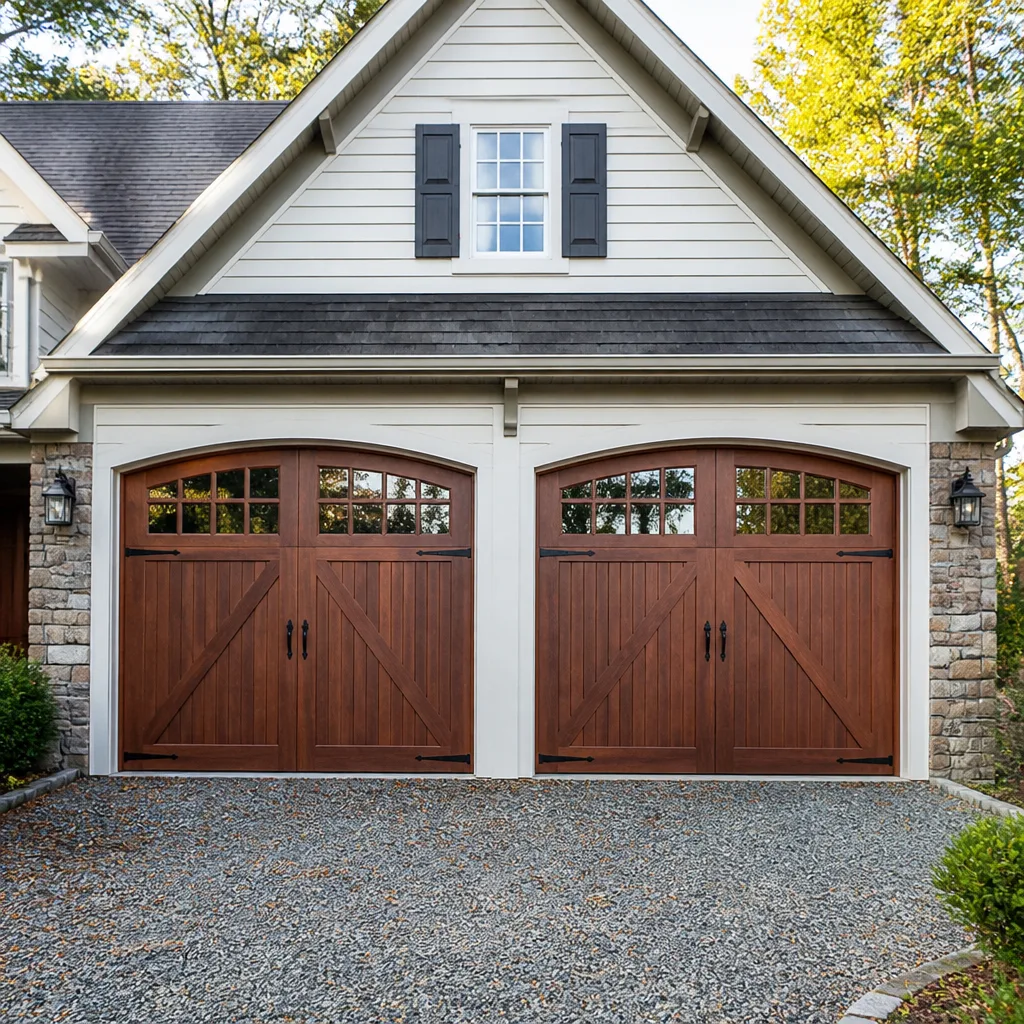 Carriage house
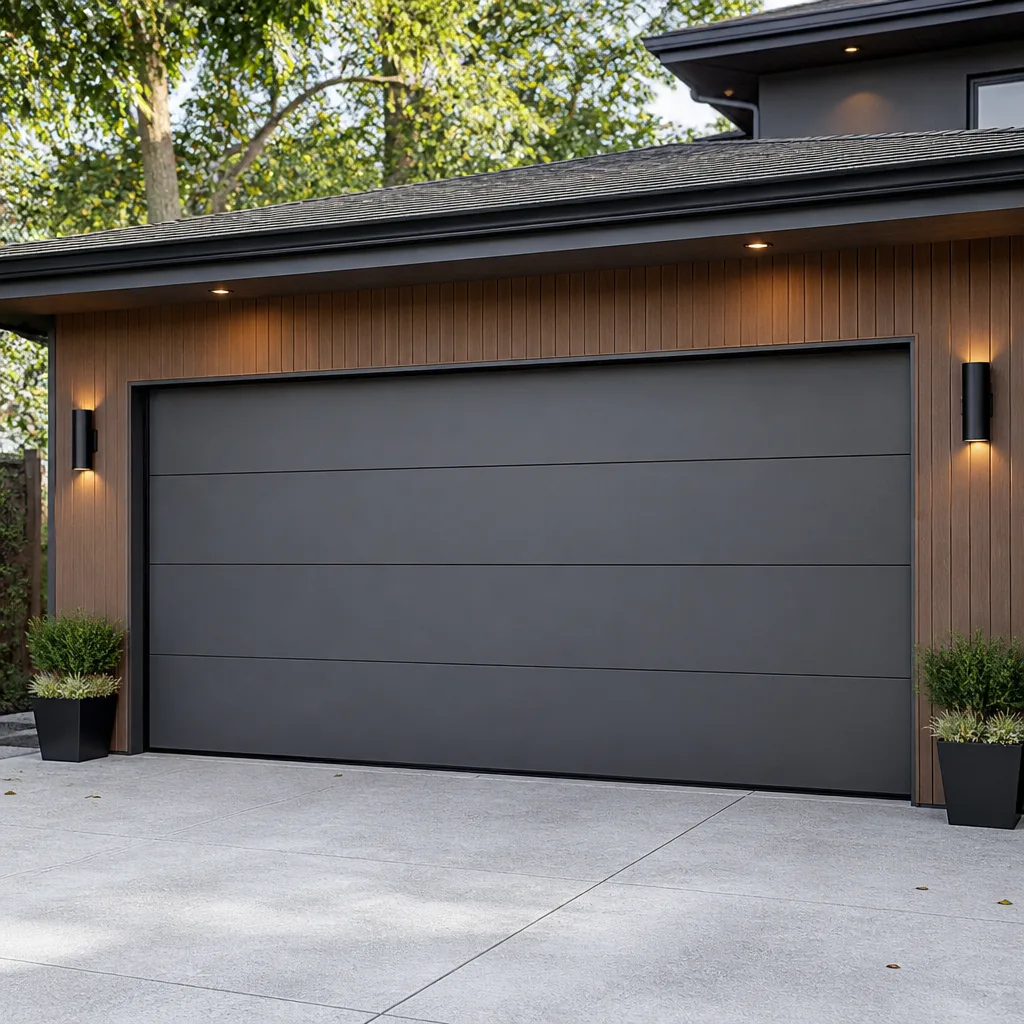 Modern flush
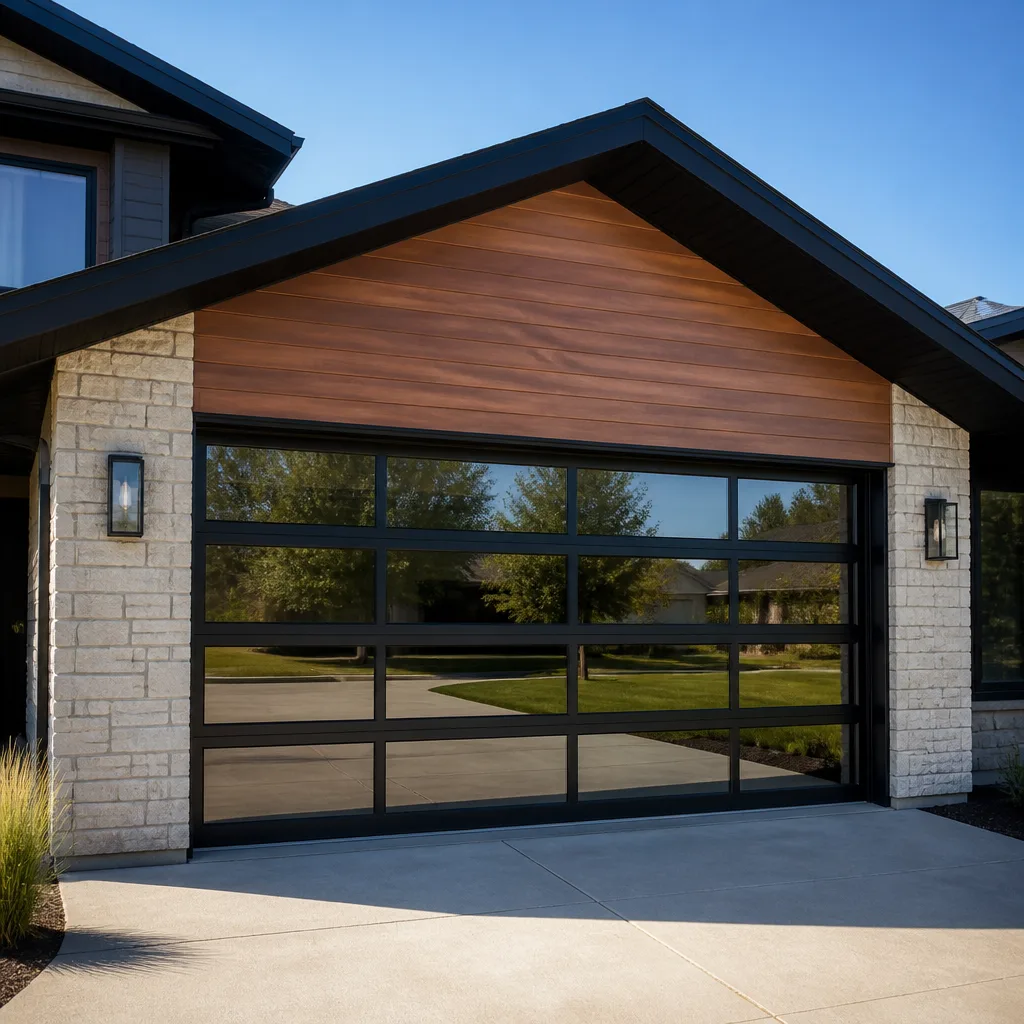 Full-view glass
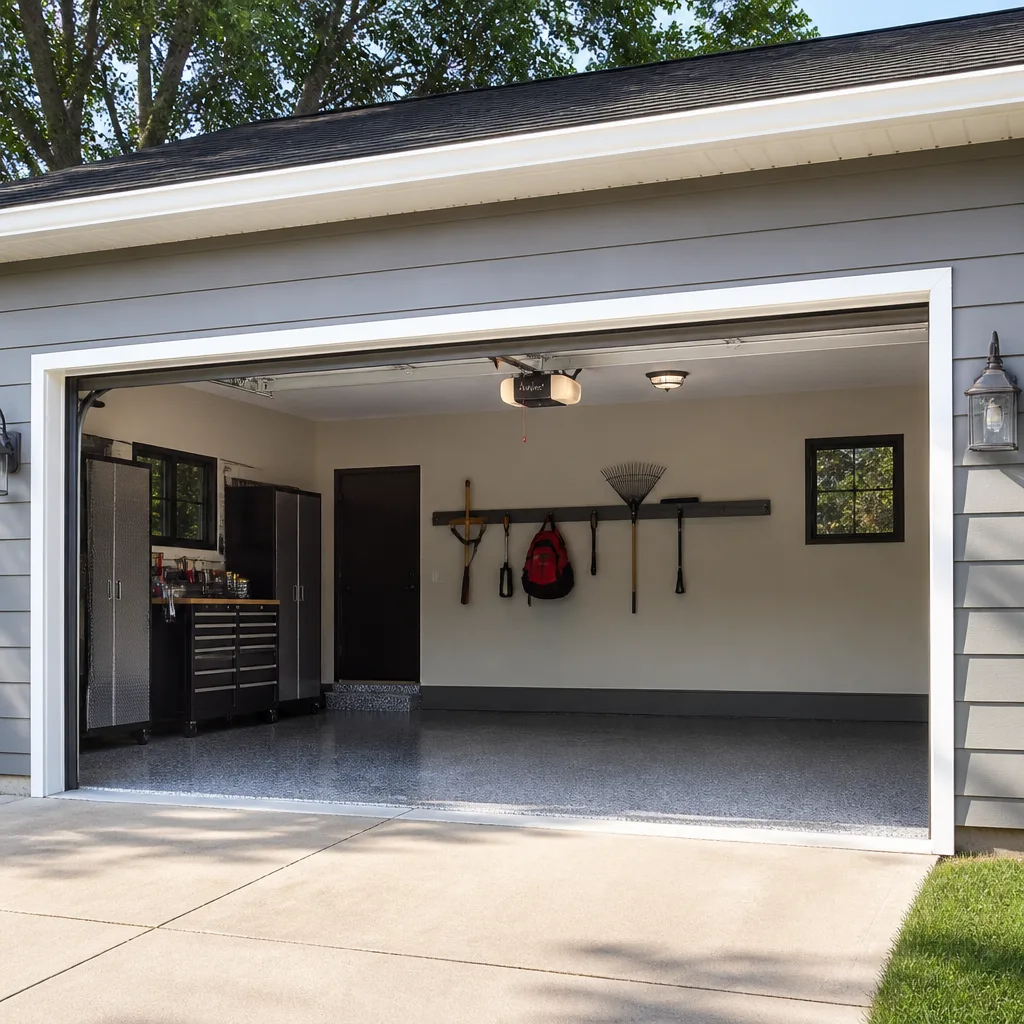 LiftMaster openers
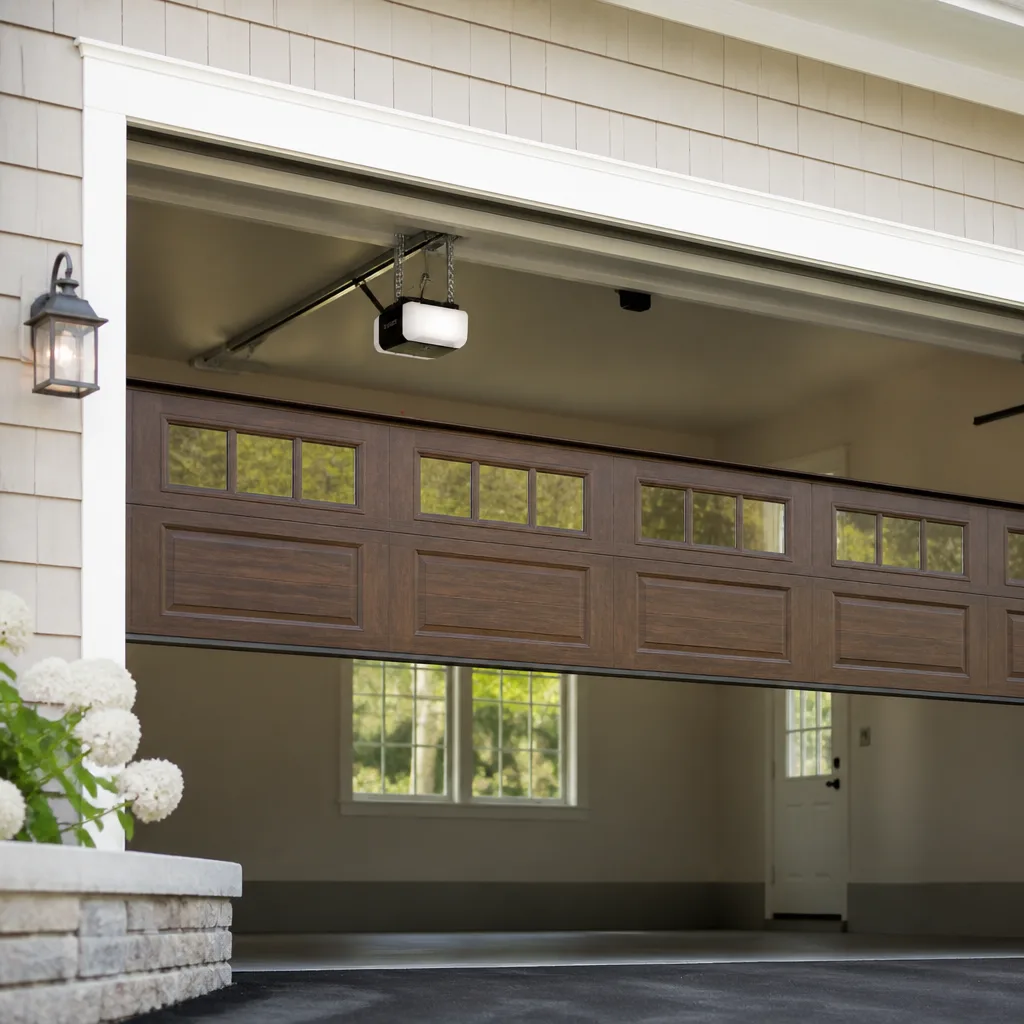 Chamberlain openers
Full 25-point door and opener safety check with every visit - springs, cables, rollers, tracks, and your LiftMaster or Chamberlain opener included
You get a price before we start. It does not change when the pro arrives.
Get your free estimateGarage Door Warning Signs: A Shore Acres Homeowner’s Reference Guide
The gap between “it’s making a new noise” and “the spring snapped before the school run” is often only a few weeks, and that window is when the real diagnostic information shows up. A worn roller, a cable starting to fray, an opener that pauses before it lifts – each one announces itself quietly first. In our experience, the signs most Shore Acres homeowners describe as a minor annoyance months earlier were the same ones that later turned into a door that wouldn’t open, with a car trapped inside. This reference guide covers those early signals, how to tell the sound of a worn roller from a fatiguing spring, how to read slow travel as a diagnostic clue, and which signs mean stop using the door immediately. It’s written for the reader, not the tradesperson.
Quick Answer
Garage door warning signs fall into three groups: audible changes (new squeaks, grinding, or a popping sound), visible changes (frayed cables, bent tracks, rusted hardware, worn rollers), and opposite-behavior changes from the opener (hesitation, reversal, remote lag). Grinding or popping, a frayed cable, or a door that reverses without a clear obstruction belong in the “stop using it now” category. Squeaks, slow travel, or a struggling opener can usually be watched for a few days while you book a service call.
Styles & brands we work with
- Raised-panel steel
- Carriage house
- Modern flush
- Full-view glass
- LiftMaster openers
- Chamberlain openers
Table of Contents
- What the Sound Tells You: Rollers, Cables, and Springs
- Corrosion Stress on Shore Acres Hardware: Where to Look
- Slow, Uneven, or Hesitant Travel
- Opener Behavior Changes That Point to Mechanical Load
- Monitor vs. Stop: Which Signs Are Which
- How Age and Shore Acres Climate Affect the Timeline
- Brand-Specific Signs: Live Before Trouble
- When a Specialist Should Be Looking at the Door
What the Sound Tells You: Rollers, Cables, and Springs
Most of the diagnostic work in our trade starts with the ears, not the eyes. Rollers on a typical Shore Acres door have one acceptable sound: a soft, low whir that stays steady from bottom to top. Any change is a message, and the message is different for each component. Here’s the plain-language breakdown we use when a homeowner describes a noise over the phone.
- Worn rollers: A high-pitched squeak or a rhythmic chirp that repeats at roughly the same interval each time the door moves. Squeaks like this usually mean a roller bearing is dry or starting to bind, and the chirp matches the revolutions of that single roller as it climbs the track.
- Loose or fraying cable: A tinny, metallic tapping or snapping sound, often just on one side. Cables run under tension, so a cable going slack against the drum will slap or ping. You may also hear it when the door is stationary, which no roller on a door that isn’t moving can cause.
- Fatiguing spring: A groaning, creaking, or the occasional sharp pop from the torsion bar across the top of the door, most often at the very start of the lift. Springs don’t fail on a soundless timeline – a spring losing tension is noisy before it goes.
- Loose hardware: A low, dull rattle from the bracket area. Usually a bolt that has backed off over hundreds of open-and-close cycles.
The order of things matters: a squeak you can point to the exact moment of the door’s travel is more likely a roller. A sound that comes from above and to one side is more likely a spring or a cable drum, and those are worth a call the same day you notice it. Not because the door is about to come off its track, but because a spring or cable under tension deserves a trained eye before anything else goes wrong. We work on the brand you already have – whether it’s a Raynor torsion setup or a Genie chain unit – so a brand-specific sound is something we can hear in the description rather than guess at.
Corrosion Stress on Shore Acres Hardware: Where to Look
Hardware on a Shore Acres garage door spends a lot of its life in humid air, and that shows up on steel before it shows up on anything else. The visible signs are easy to miss on a glance up at the door from the car. They’re obvious once you know which four spots to actually look at. Check these on the same walk-around once a season:
- Hinge plates and their rivets. A hinge with rust running from the rivet down toward the pin isn’t cosmetic. It’s telling you the pivot point is losing its clearance, and the door will begin to bind at that panel next.
- The bottom bracket and its cable attachment point. The bottom corner of the door sees the most moisture and takes the most load during the first inch of lift. Look for orange-brown streaks running down the door from the bracket.
- The vertical track edge where the rollers ride. Rust at the inside edge of the track changes the surface the roller rolls on. You’ll notice a door that rides smoothly on one side and drags slightly on the other before you notice the color change.
- Spring coils. Look at the coils from the side rather than head-on. Fine flaking or a dull, pitted surface means the spring is starting to worry you about the wrong thing (appearance) instead of the right one (load). Rust doesn’t cause a spring to break on its own, but it’s a reasonable flag to have it checked.
None of these require you to climb a ladder or touch the spring mechanism. Visual-only checks from the floor are the right approach. Anything that needs your hand on the torsion bar is a job for a technician, and a spring under load is the most dangerous thing in the whole assembly.
Slow, Uneven, or Hesitant Travel
Slow travel is treated as an annoyance when it’s actually one of the best diagnostic signals a homeowner has access to. A door that lifts smoothly but slowly is drawing more motor current than it should because something is resisting. That resistance can be friction in a track, a roller that won’t turn, a spring that’s lost tension, or an opener that’s working harder than designed. Here’s how to tell which one you’re likely looking at.
Slow but consistent
A door that’s always been a little slow, or slowed gradually over a month or more, more often points to a tired spring or an opener coming to the end of its useful cycle count. Springs lose tension gradually before they fail; the door gets heavier to lift, and the opener compensates until it can’t.
Slow on one side only
A door that visibly rises at an angle is almost always a track issue or a roller issue on the heavy side. That’s a stop-and-call situation. Running the opener repeatedly against a door that’s cocked will start bending the panels or pulling the top bracket out of the header.
Pausing on the way up
A door that starts to lift, stops, and then continues after a beat usually means the opener is hitting a stall point and recovering. That’s a mechanical load problem – a bind, a bent track, a roller missing from its carrier – far more often than an electronics problem.
If you’ve noticed a change in travel speed and it has crept in over weeks, that’s the kind of thing a garage door repair visit is designed to diagnose. The door itself is often telling the technician which part is at fault before any tool comes out.
Opener Behavior Changes That Point to Mechanical Load
Homeowners often blame the opener when the door is the problem. Modern openers – LiftMaster, Chamberlain, Genie, and similar – are built to compensate for a lot of resistance, and they’re also built to give up when they can’t. That gives you a set of behaviors that reliably point toward a mechanical load issue rather than a failed circuit board or a dead remote. The diagnostic question that matters: is the opener doing something new, or is the door doing something new that makes the opener look bad?
- Hesitation before lifting: The opener has to push harder than it once did. Usually a heavier door – spring tension loss, a track binding, or a roller seized on the carrier.
- Reversal on the way down: If there’s no obstruction, the door is meeting more resistance than the safety sensor threshold allows. That’s a stop-and-call sign, because a door that reverses unpredictably isn’t predictable.
- Remote lag: The remote takes a second longer to raise the door than it used to. It’s rarely the remote – when the opener motor has to labor, the whole unit slows down. A fresh remote battery is a fine first check, but if the door itself also sounds different, the remote isn’t the story.
- Lights flickering when the motor runs: A signal that the opener is drawing more current than it used to. That’s the door asking the motor to work harder.
- Safety sensor faults on warm afternoons: More common than most people realize; the sensors get knocked slightly out of alignment and the door refuses to close. That’s a clean fix, but the fact that it happened repeatedly on the same side is worth mentioning when you call.
This is where brand familiarity helps: a LiftMaster logic board that is genuinely failing behaves differently from a Chamberlain unit that’s simply hitting its force limit. Diagnosed correctly the first time is the difference between replacing an opener you didn’t need to replace and solving the resistance that was actually causing the problem. Our garage door opener repair work starts with the door, not the box.
Monitor vs. Stop: Which Signs Are Which
This is the single most important distinction in this guide. Some warning signs give you time. Some don’t. Getting the classification right is what keeps a homeowner from either panicking on a squeak or running a door that shouldn’t be run. Here’s how we sort them.
Safe to monitor for a few days
- A new squeak that repeats with the door’s travel
- A drum-tight door that has become slightly slower over weeks
- A remote that takes a moment longer than it used to
- Visible surface rust on hinges with no sign of the door binding
- Slightly louder operation but the door still travels evenly
Stop using the door immediately
- A popping sound from the torsion bar, followed by a door that suddenly feels heavy or won’t stay up
- Any fraying, bare strands, or slack in a cable
- A door traveling at an angle, off its track, or scraping on one side
- The door reverses with no obstruction in its path
- Visible cracks or gaps in the spring coils, or a spring that’s clearly broken
If it’s on the stop list, don’t try the door once more to “see if it’s still doing it.” That extra cycle is how a manageable repair turns into a panel replacement or a bent section of track. When it won’t open and you can’t wait, a proper emergency call is not an overreaction – the door is telling you something. We answer 24/7, and a call outside dispatch hours is booked into the next opening, Sunday through Friday, 7am to 7pm.
How Age and Shore Acres Climate Affect the Timeline
Shore Acres has mild winters, and that’s mostly good news for garage doors. There’s no long freeze-thaw cycle to stress springs in the cold, and hardware doesn’t get the same thermal swing you’d see further north. What we do get is humidity, and humidity takes a slower, steadier toll on steel hardware than cold does. That changes the pattern of what we see: fewer catastrophic winter spring failures, more gradual wear on hinges, brackets, and track surfaces across the year.
Age is the second variable. A typical torsion spring has a finite number of cycles in it, and the average household can burn through a big chunk of that in a normal week of comings and goings. The practical takeaway: a door that has been in service for a long stretch and has never had its hardware checked is a door that’s carrying a lot of accumulated wear until something reaches its end. What’s helpful is knowing the signs so you’re not relying on luck.
Homeowners in Shore Acres planning a full replacement rather than a repair have a different question – not “what’s failing now” but “what’s near the end of its practical life.” That’s where a measure and a written price on a garage door installation make more sense than throwing parts at a door that’s ready to be replaced.
Brand-Specific Signs: Live Before Trouble
Knowing the brand of your door and opener helps you notice the right warning signs and helps a technician diagnose on the first visit. In our experience, the major brands each have characteristic early warning signs worth knowing.
- LiftMaster and Chamberlain: Both are typically paired with a safety-beam sensor setup. Sensor misalignment tends to show up as the door refusing to close on the warmest part of the day. A remote lag on these is more often a wireless issue than a mechanical one – but only if the door travels smoothly. If the door is also slow or louder, the mechanical load is the issue and the remote is a red herring.
- Genie: Chain-driven units run loudly even in good health. The useful sign on a Genie setup is a change in the rhythm, not the volume. A ticking that syncs with the chain is worth checking, but a change in the door’s travel time is the more reliable signal.
- Raynor and Clopay doors: The door panels are the useful thing to watch. Hinge rust and panel stress near the bottom brackets tend to show up first on these doors, and it’s much easier to fix a hinge plate than a bent panel.
We work on the brand you already have, and being familiar with the specific signs for what’s on your header saves the round-trip that a generalist needs to figure out which part is which. It’s also why we can usually tell you on the phone what’s likely going on before anyone drives out.
When a Specialist Should Be Looking at the Door
Not every warning sign needs a technician. A quiet squeak and a slightly slower door can usually wait for a scheduled visit. But several signs are past the point where monitoring is the right call:
- Any sound from the spring or cable that wasn’t there a week ago.
- Visible fraying, bare strands, or slack in a cable.
- A door traveling at an angle, off its track, or scraping metal on metal.
- An opener that reverses on the way down without an obstruction.
- Repeated safety sensor trips that don’t go away after cleaning or realignment.
- Any sign of the door struggling to lift under its own weight – a door that won’t stay halfway up is a door that needs looking at.
Springs and cables are the parts of this trade that carry real injury risk. They’re under enough stored tension that a trained technician uses specific tools – winding bars and the right technique – rather than guesswork. This is not something to attempt with a ladder and a wrench. For anything on this list, we’d rather you call and let a specialist look at it than cycle the door one more time to confirm.
Common Mistakes to Avoid
- Running the door “one more time to see if it clears.” That extra cycle is what turns a worn roller into a bent track or a snapped spring into a panel replacement. If a sign is on the stop list, stop using the door.
- Treating a popping spring as a squeak. Squeaks and pops are different. A squeak is a roller or hardware issue; a pop from the torsion bar is the spring itself and deserves a same-day call.
- Replacing the opener when the door is the problem. If the door is heavier, slower, or louder than it used to be, the opener is doing its best to compensate. A new opener on a worn door will wear out faster than the old one did.
- Ignoring visible rust on the hinge plates. Rust on a rivet or a bottom bracket means that pivot is seizing. It doesn’t look serious on a glance, and then the door starts binding at that panel.
- Adjusting the opener force limit to “make it stronger.” The force limit exists to protect the door and you. Raising it to compensate for a stiffer door trains the opener to work harder than the mechanism was designed for.
- Skipping the seasonal walk-around. Five minutes with the car parked outside the door, watching and listening once a season, catches the majority of the signs in this guide while they’re still cheap to fix.
- Assuming a slow door will “pick up speed” after a cold snap. In Shore Acres there’s no cold snap to blame. Slow means resistance, and resistance means something has changed.
See the difference
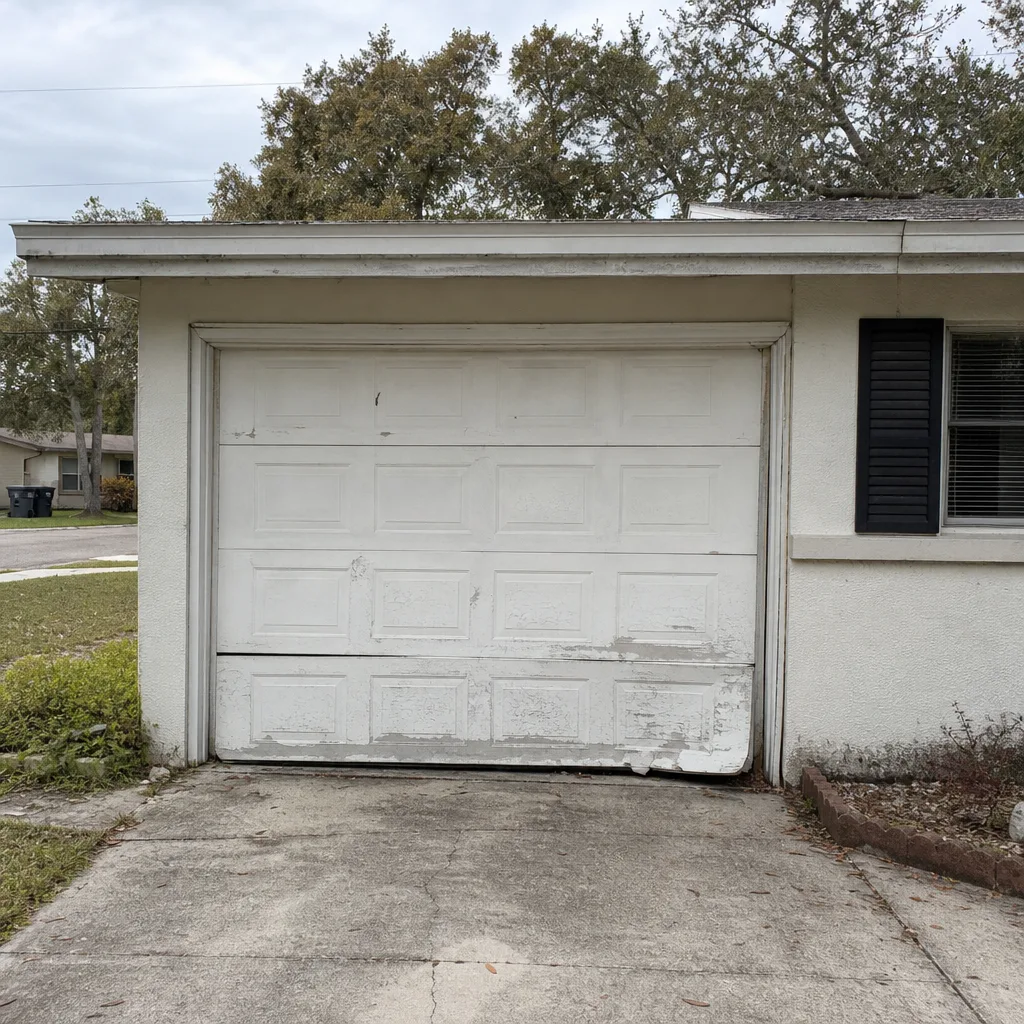 Before
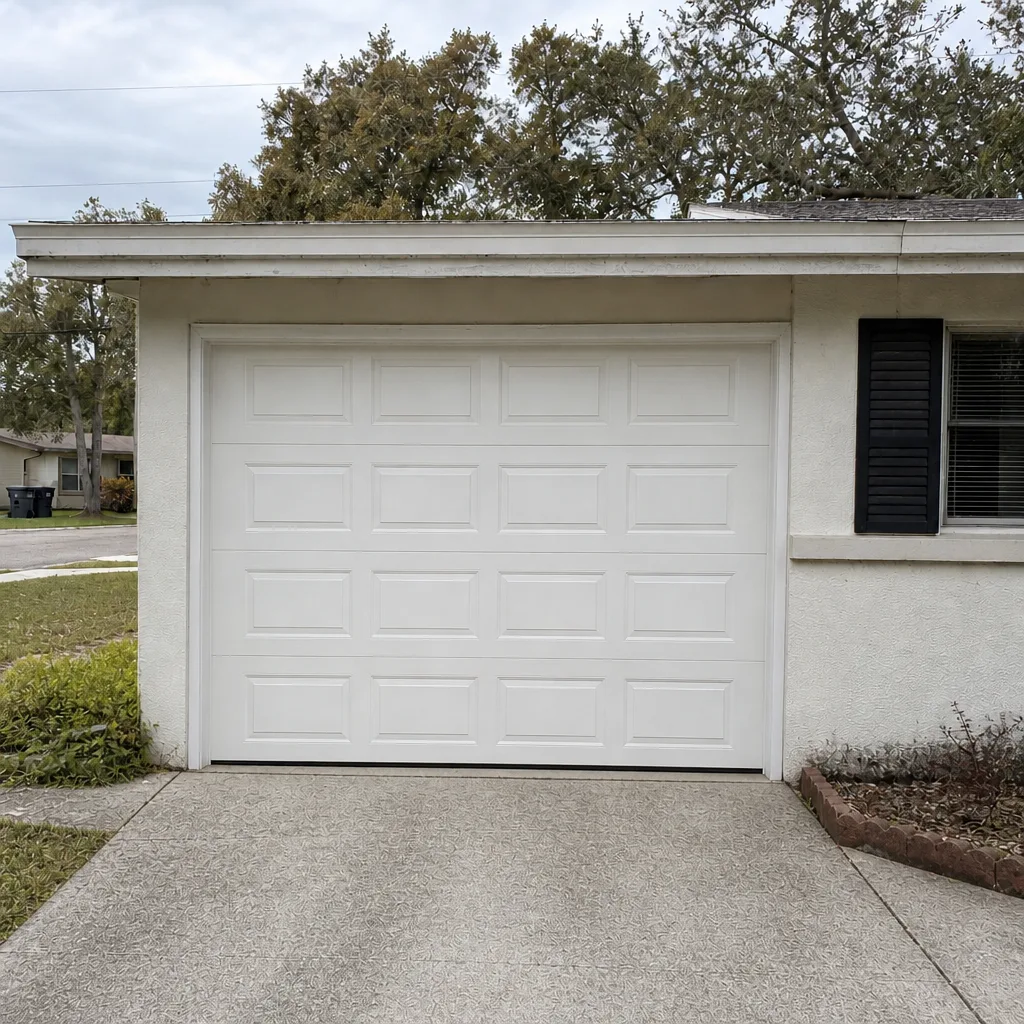 After
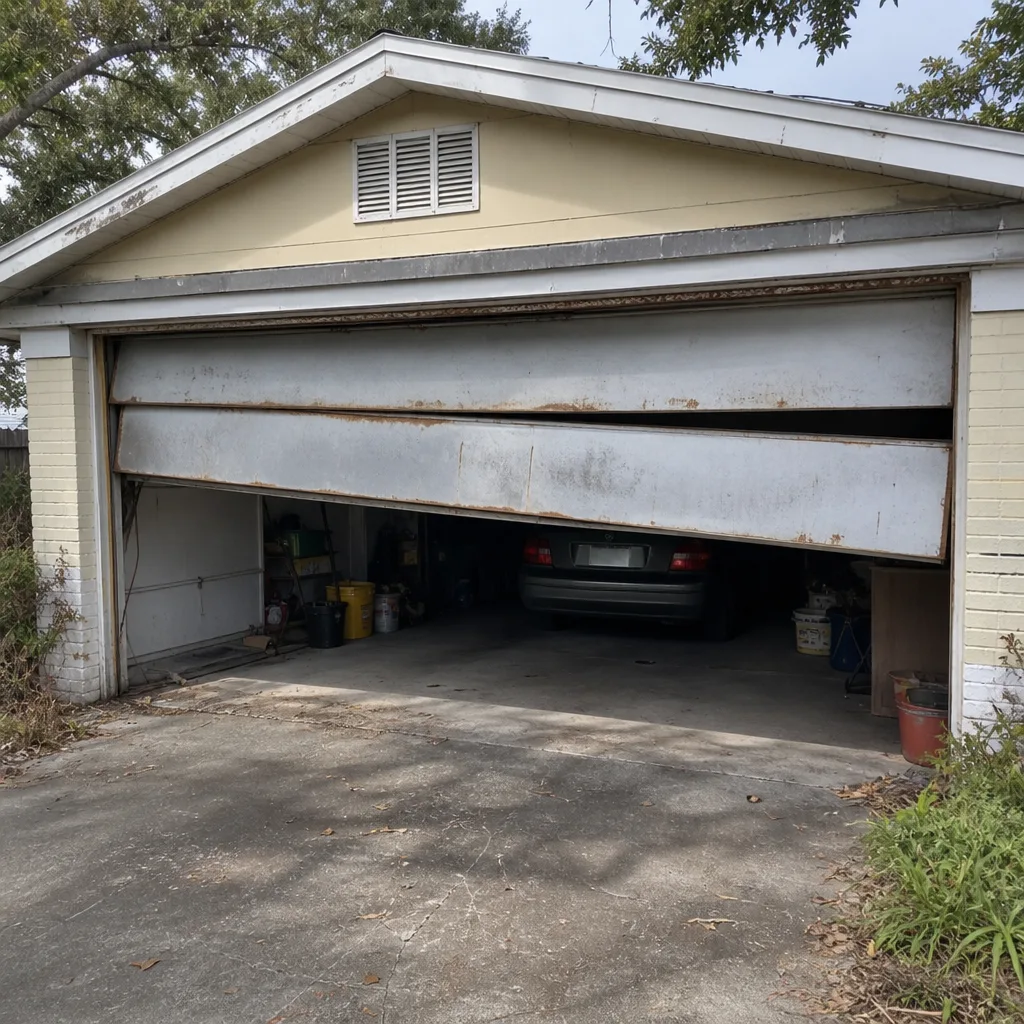 Before
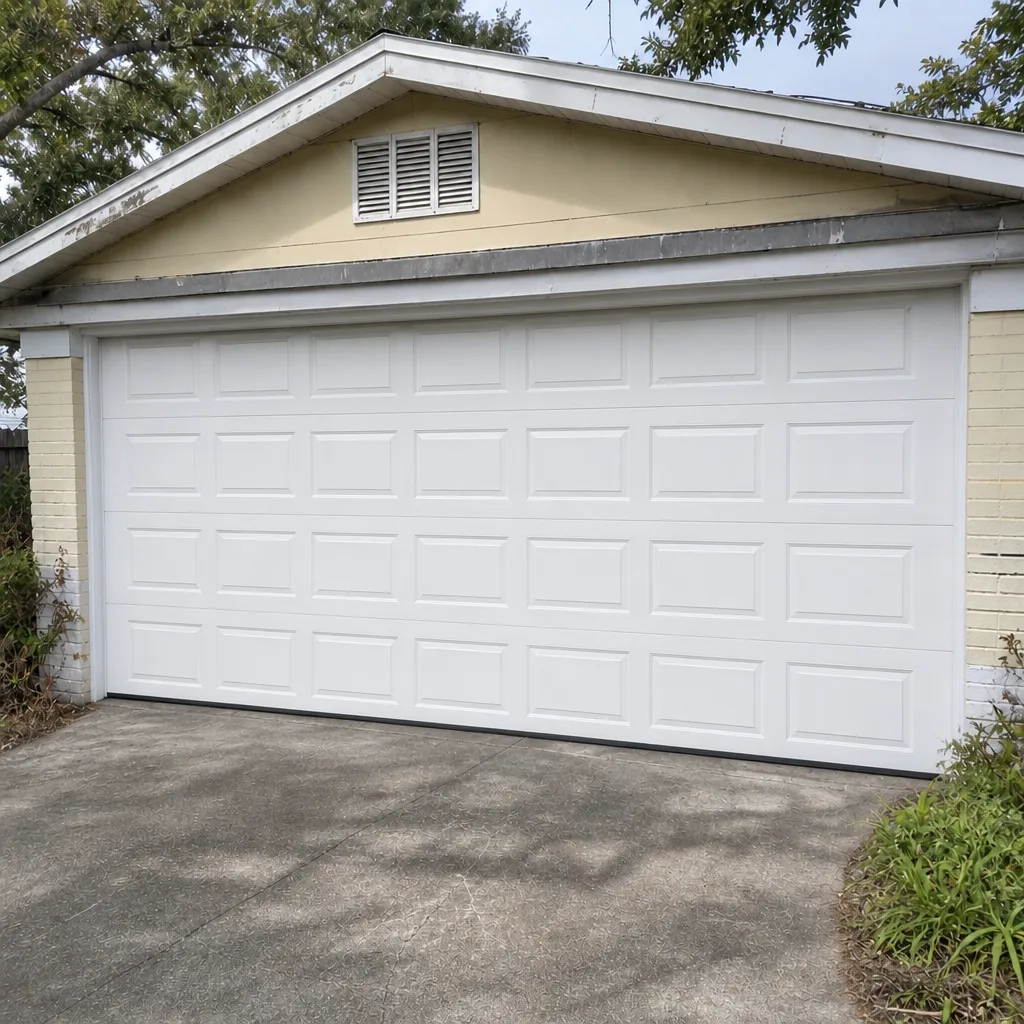 After
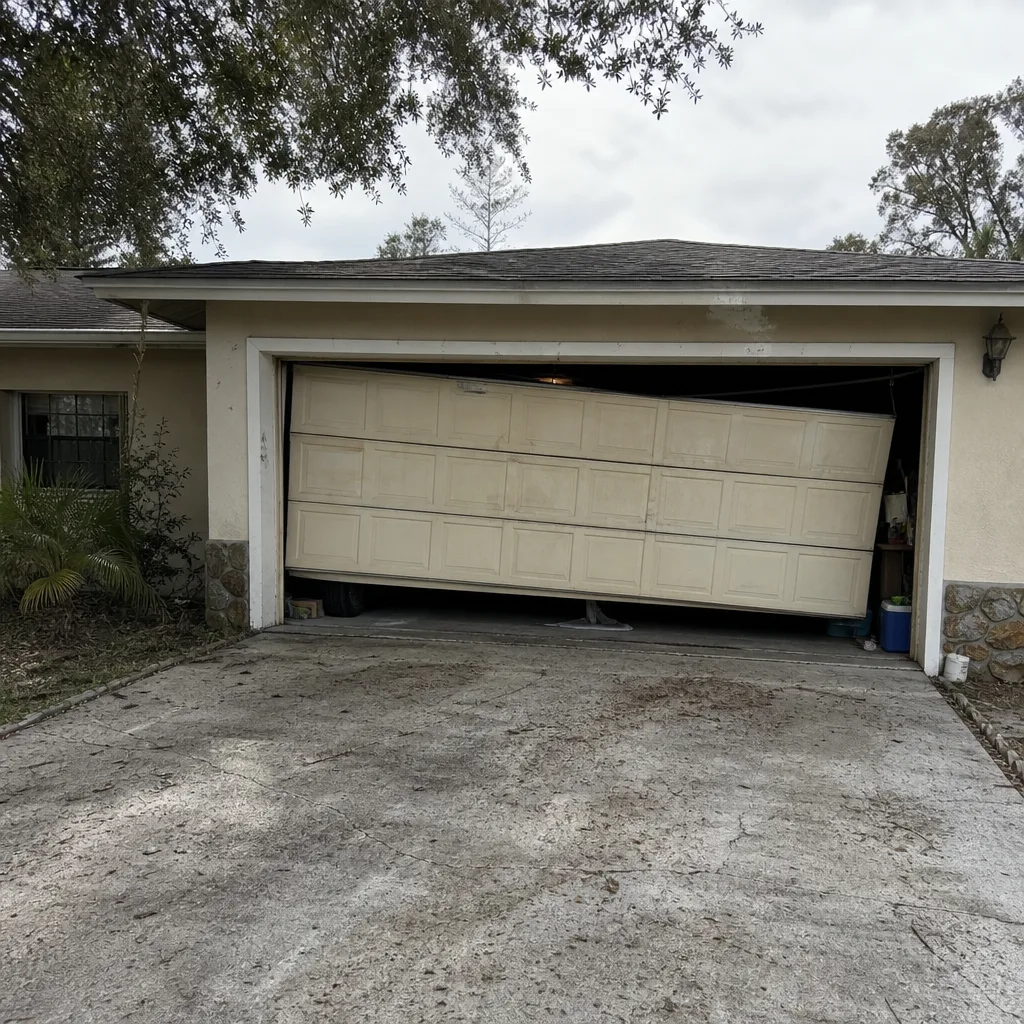 Before
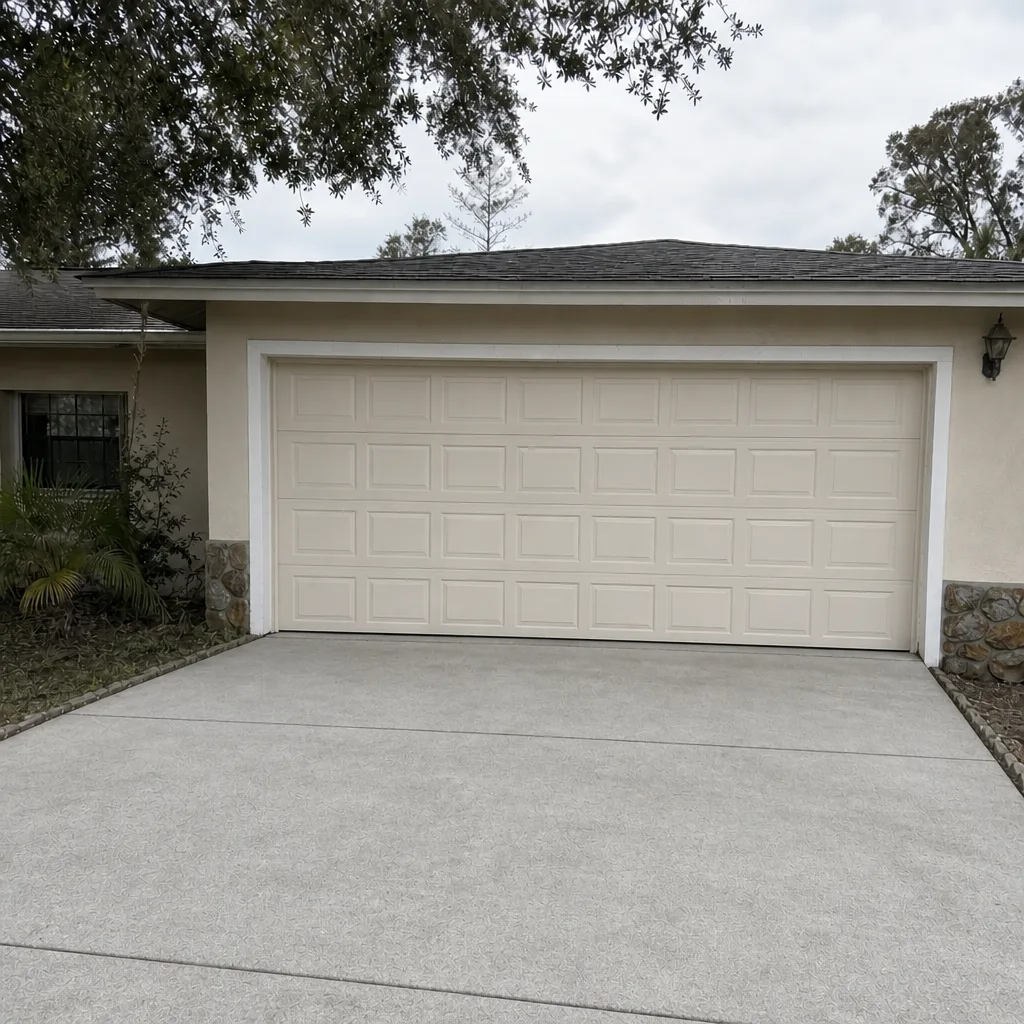 After
When to Call a Professional
Call a professional when the sign is one of these: any popping sound from the spring, any fraying or slack in the cable, a door that reverses without obstruction, a door at an angle or off its track, or a door that suddenly feels heavy to lift. Those are the point at which further use risks damage or injury. For squeaks, slow travel, or an opener acting up without a door problem, a scheduled service visit is enough – and it’s worth booking before the sign turns into one of the stop-list items. Garage Door Repair Shore Acres offers free estimates in Shore Acres – call (866) 854-5034. The quote is agreed before any work starts, and the written estimate is the price. If it’s a spring, a cable, an opener, or a full door replacement, one call covers it all. We answer 24/7. Fast dispatch from 7am to 7pm, Sunday through Friday.
Frequently Asked Questions
The most common are a new squeak or grinding sound during travel, a door that’s noticeably slower over time, visible fraying on cables, rust on hinges and brackets, and an opener that hesitates or reverses unpredictably. Any of these changing after a long period of stable operation is worth having looked at, and the sooner the better for the cheap-to-fix ones. Call (866) 854-5034 for an exact quote – estimates are free.
A squeak is safe to monitor briefly, usually a few days to a week while you book a service visit. It’s usually a roller bearing or a hinge plate that’s lost lubrication or is beginning to bind, and the fix is straightforward when it’s caught early. Ignoring a squeak for weeks is where the roller seizes and the door starts dragging on its track instead. Call (866) 854-5034 to book a service visit.
Yes, and that’s a stop-using-it-now sign. A door that reverses with nothing in its path is usually meeting more resistance than the opener’s safety threshold allows, and the cause can be a binding track, a spring losing tension, or a safety sensor out of alignment. Don’t raise the opener’s force limit to “make it close” – get it looked at, because unpredictable travel is exactly the condition the safety system exists to catch.
It’s a real warning sign. Slow travel usually means the door is heavier to lift than it was designed to be, and that points to a fatiguing spring, friction in the tracks, or a roller that’s seized. Catching it while it’s still “just slow” usually means a cheaper fix than waiting for the door to stop lifting altogether. Call (866) 854-5034 for an exact quote – estimates are free.
Stay on the floor and use your eyes. Look at the hinges along the door’s inner panels, the bottom bracket on each side, the inside edge of the vertical tracks, and the spring coils from the side. Rust streaks, missing rollers, or coils that look pitted are the four things to look for. Anything that needs your hand on the torsion bar is a job for a technician – springs carry too much stored energy to inspect closely by touch.
Some differences, and being familiar with them helps narrow down the cause. LiftMaster and Chamberlain setups often show safety sensor issues first; Genie chain drives show changes in the rhythm of travel more than volume; Raynor and Clopay doors show hinge and panel stress at the bottom brackets first. We service all of these – along with Amarr, Wayne Dalton, and Craftsman – so a brand-specific concern is something we can talk through before an appointment. Call (866) 854-5034 for an exact quote – estimates are free.
The Bottom Line
Most garage door failures don’t come out of nowhere. They send advance notice – in the sound, in the hardware, in how the door travels, in how the opener behaves – and that notice usually shows up weeks before the failure. Warning signs fall into two categories: monitor (squeaks, slow travel, opener hesitation) and stop (spring pops, frayed cables, doors traveling at an angle, doors reversing without obstruction). A five-minute seasonal walk-around catches most of them while they’re still cheap. When a sign is on the stop list, don’t test it further – call in a specialist who knows the trade and the brand on your door. Garage Door Repair Shore Acres is a garage door specialist because your garage door is our only trade, with technicians who diagnose the door itself rather than guessing. Call (866) 854-5034 for a free estimate. We answer 24/7. Fast dispatch from 7am to 7pm, Sunday through Friday.
Written by the team at Garage Door Repair Shore Acres.